
The Orchestra Teacher's Winter Concert Survival Guide
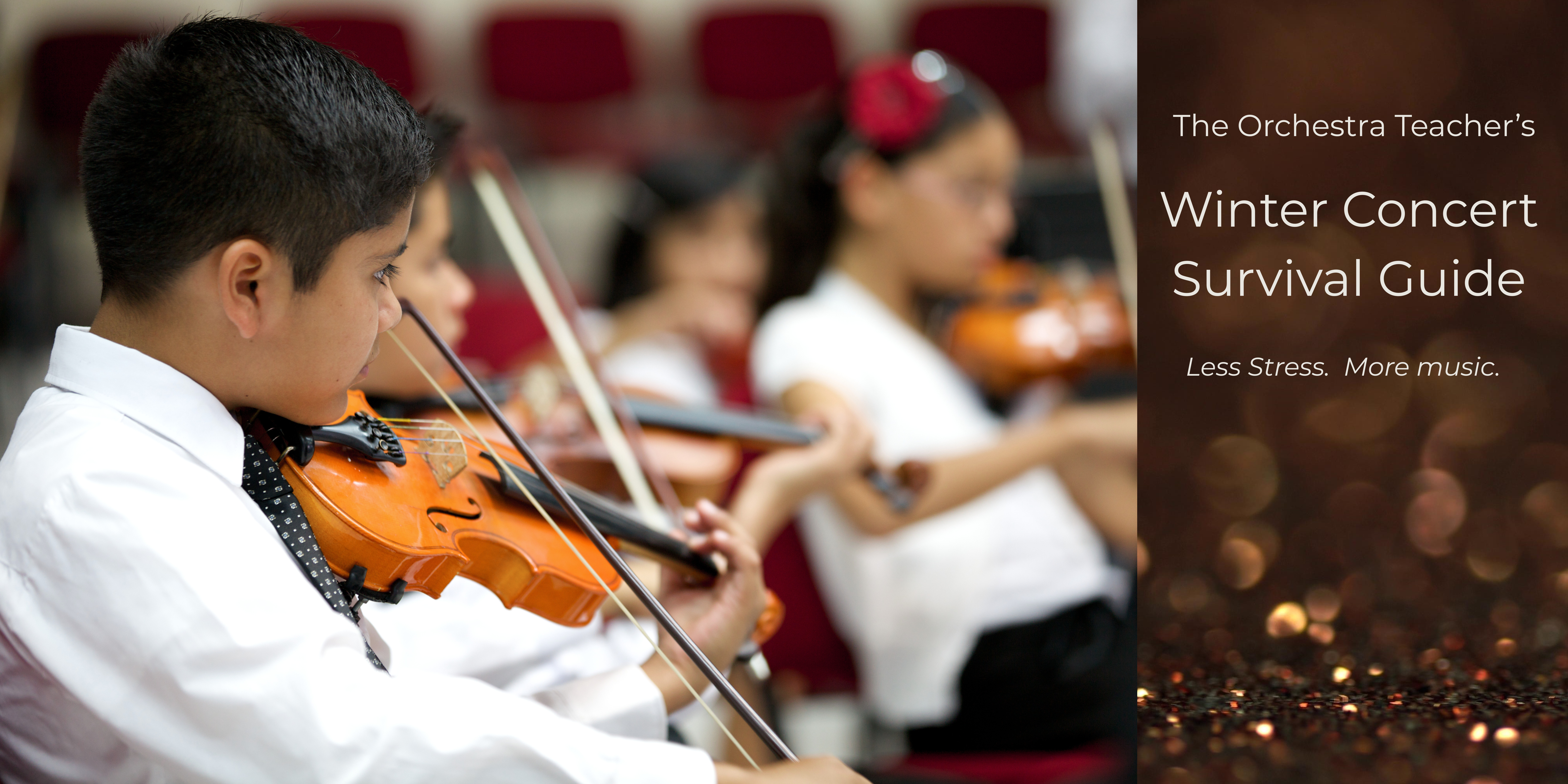
The Winter Concert Survival Guide: Keeping Your Orchestra (and Yourself) Together
The music is selected. The concert date is on the calendar. Your students have been rehearsing for weeks. And somehow, despite all that preparation, concert season still manages to bring its own special brand of chaos.
Between holiday distractions, last-minute absences, missing shoulder rests, and the occasional student who suddenly forgets everything they've learned, the final weeks can test even the most experienced orchestra teacher.
You've already chosen the repertoire and planned the concert. Now it's about getting through the final stretch with your students' confidence, and your own sanity, intact.
1. Accept That December Rehearsals Are Different
December rehearsals come with their own set of challenges. An assembly takes half your violas. A field trip takes the other half. And the students who remain would really like to know whether they can sit next to their friends at the concert.
Adjust your expectations without lowering your musical standards. Instead of trying to fix everything, choose two or three priorities: the entrance after the long rest, the transition everyone rushes, or the final chord that never seems to end together.
Focus on those passages, give students something specific to listen for, and then try again in context. Save full run-throughs for checking pacing, stamina, and how the program flows.
You don't need another perfect rehearsal. You need a productive one.
2. Know When to Stop Fixing Things
As concert day approaches, it's tempting to keep making adjustments. But not every problem needs to be solved in the final rehearsal.
A missed entrance that leaves an entire section behind? Definitely worth addressing. A bowing that might be slightly more elegant? That can probably wait until January.
At this point, students need to feel confident in what they've prepared. Focus on playing together, listening across sections, and creating clear beginnings and endings.
Remember, a confident performance with a few imperfections is better than one where students are second-guessing every note.
3. Prepare for the Things That Always Go Wrong
No matter how prepared you are, something will inevitably go missing, break, or stop working on concert night.
A small emergency kit can save you from scrambling backstage when a student suddenly announces that their shoulder rest has disappeared.
Here are a few things worth keeping on hand:
- Replacement strings: Keep a few extras appropriate for the instruments and sizes in your orchestra.
- Spare shoulder rests: Include commonly used sizes, and check that they're in working condition.
- Rosin and soft cleaning cloths: For last-minute rosining and wiping down instruments.
- Sharpened pencils: Several. Their disappearance remains an unsolved orchestral mystery.
- Backup music: Keep authorized spare copies of parts organized in concert order.
- A tuner: Along with extra batteries if needed.
- Cello endpin stops: Because nobody wants an endpin slipping mid-performance.
- Tape and a small flashlight: For securing loose pages and finding things backstage.
Keep everything together in one clearly labeled bag so you're not hunting through drawers when you need something.
4. Manage the Nerves—Yours and Theirs
Even the most well-prepared students can get nervous when there's an audience. Take a few minutes to talk about performance nerves and remind students that feeling anxious is completely normal. A little nervous energy can even be a good thing!
Remind students that mistakes happen, even to professional musicians. What matters isn't playing every note perfectly, but knowing how to recover and keep the music moving.
During rehearsals, practice playing through mistakes without stopping. If someone misses an entrance or loses their place, encourage them to listen to the ensemble, watch the conductor, and find a familiar spot to jump back in. Practicing these moments ahead of time can help students feel more confident when they're onstage.
And don't forget about your own nerves! Students take their cues from you, so try to keep your energy calm and your preconcert routine familiar. Give clear, simple instructions, offer encouragement, and resist the urge to squeeze in one last correction.
At this point, a little reassurance will go much further than another reminder about measure 47.
5. Don't Forget That You're a Human Being
Concert day can be a marathon, especially when you're teaching a full school day before the evening performance.
Make sure you've eaten something, keep water nearby, and wear shoes you can comfortably stand in for hours. Dinner shouldn't depend on discovering a forgotten granola bar at the bottom of your conducting bag.
And remember, you don't have to personally solve every problem that comes up.
If someone else can handle a question, locate a missing item, or direct a student to the right place, let them. Save your energy for the things that actually require your attention.
You can't be the conductor, instrument repair technician, backstage manager, and emergency snack provider all at once.
6. Remember What the Concert Is Really About
It's easy to get caught up in everything that could go wrong, but take a moment to remember what the concert represents for your students.
For some, this may be their very first time performing onstage. Others may finally nail an entrance they've struggled with for weeks.
You'll probably hear a few things you wish had gone differently. But you'll also hear progress: a steadier pulse, more unified bowing, or a musical phrase that finally comes together.
Families aren't expecting a professional orchestra. They're there to celebrate the students in front of them and see how far they've come.
After the final bow, take a moment to acknowledge something your students did well before jumping into what needs improvement. Let them enjoy what they've accomplished.
The winter concert doesn't have to be perfect to be meaningful. If your students walk offstage feeling proud of what they've accomplished and excited to keep playing, that's something worth celebrating.
Join the free StringOvation program for exclusive perks, classroom tools, and seasonal savings — made for teachers and performers alike.
Sign up for StringOvation membership
Share this article


